
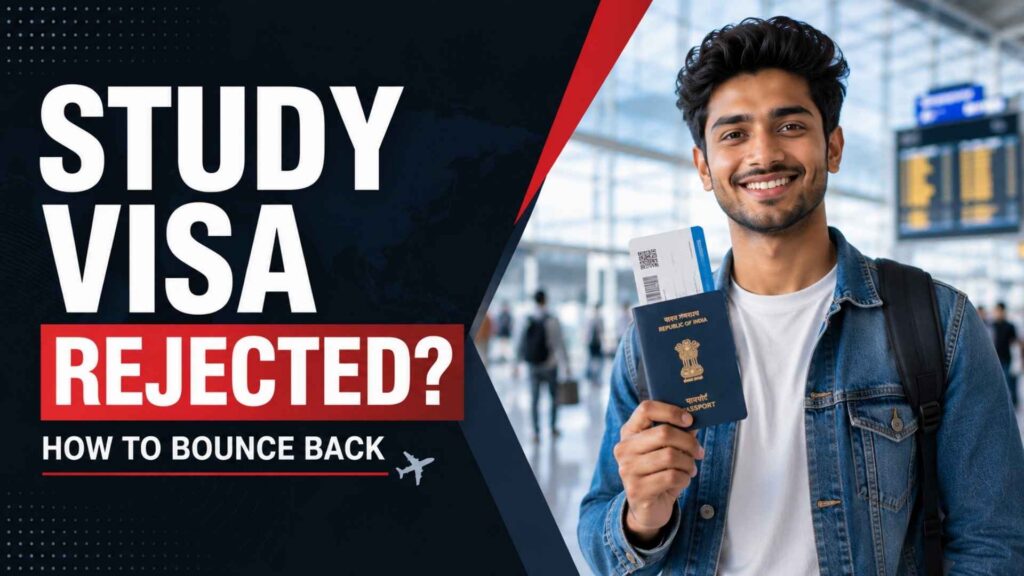
Getting a student visa rejection letter is devastating. You’ve spent months shortlisting universities, writing your Statement of Purpose, arranging documents, and dreaming about life abroad — and then, one email or stamp changes everything. Student visa rejection can feel devastating, but many students successfully reapply after correcting the right mistakes.
But here’s what you need to hear: a student visa rejection is not the end of your study abroad journey. Thousands of students face visa refusal every year, and a large number of them go on to successfully get their visa approved — after correcting the right mistakes.
At People’s Overseas, one of India’s trusted overseas education consultancies with office in Surat, we’ve helped hundreds of students bounce back from visa rejections and turn those rejections into approvals. This guide will walk you through everything — from understanding why rejections happen to taking the right steps toward a successful reapplication.
Why Student Visa Rejection Happens
Visa officers assess every application against a strict set of criteria. They evaluate whether you are a genuine student, whether you have the financial capacity to study abroad, and whether you intend to return to your home country after completing your studies.
When any part of your application raises doubt, your student visa gets refused. The good news? Most rejections are preventable — and fixable.
Most Common Student Visa Rejection Reasons
1
Weak or Poorly Written SOP
The Statement of Purpose (SOP) is often the most underestimated document. A generic, unconvincing, or copy-pasted SOP fails to communicate your genuine intent to study. Visa SOP mistakes are among the top reasons for study visa rejections worldwide.
2
Insufficient Financial Proof
Visa officers want to see that you can afford your tuition and living expenses without working illegally. Weak or inconsistent financial proof for student visa applications — including gaps in bank statements or recently deposited large sums — raises major red flags.
3
Incomplete or Incorrect Documentation
Missing transcripts, incorrect letters, unsigned forms, or inconsistent dates — even minor visa documentation mistakes can lead to a refusal.
4
Failure to Prove Genuine Temporary Entrant (GTE) Intent
Countries like Australia require applicants to prove their Genuine Temporary Entrant (GTE) status — meaning you will return home after your studies. A weak GTE response is a leading cause of Australian student visa rejections.
Official Australian student visa requirements are available on Australian Student Visa Guide
5
Unexplained Study Gap
A gap in education without a clear, credible explanation makes officers question your academic intent. Any study gap must be addressed honestly and clearly in your application.
6
Poor Visa Interview Performance
In some countries, visa interviews are part of the process. Low confidence, inconsistent answers, or visa interview mistakes can lead to a direct refusal, even if all your documents are in order.
7
Wrong Course or Institution Selection
Choosing a course that does not align with your academic background or career goals creates doubt about your intentions. Officers look for logical progression.
8
Misrepresentation or Fake Documents
Submitting falsified or misleading documents is a serious offense and can result in permanent bans. Always rely on legitimate student visa consultants for guidance.

What to Do Immediately After a Visa Rejection
Step one is to stay calm. Step two is to act smart. Here is what you should do right after receiving a study abroad visa rejection:
- Read the rejection letter carefully — understand exactly why your visa was refused
- Do not reapply immediately without addressing the root cause of the rejection
- Collect all documents from your previous application for review
- Seek guidance from an experienced student visa consultant who understands your destination country's requirements
- Get your SOP, financial documents, and profile evaluated by a professional
- If eligible, consider a visa refusal appeal — some countries allow you to contest the decision
Working with a trusted visa consultancy at this stage can make all the difference. A professional evaluation will identify exactly where your application fell short.
Can You Reapply After a Visa Refusal?
Yes — in most cases, you absolutely can reapply after a student visa rejection. However, simply submitting the same application again will almost certainly result in the same outcome.
Before you reapply for a student visa, you must:
Understand the exact reason for rejection from your refusal notice
Fix every weakness in your previous application
Strengthen your SOP, financial documentation, and supporting materials
Wait the appropriate time (usually no mandatory waiting period, but allow 4–8 weeks minimum to prepare properly)
Consider alternative universities or courses if your profile-course fit was an issue
Many students wonder: does visa rejection affect future applications? The honest answer is — it can, if you reapply without addressing the original problem. But a well-prepared reapplication with clear improvements is viewed positively by visa officers.
How People's Overseas Helps Students After Visa Rejection
People’s Overseas is a trusted overseas education consultant in India with a strong track record of helping students recover from visa rejections. Our expert team provides end-to-end visa reapplication support tailored to your specific situation.
Here's how we help:
- In-depth analysis of your rejection notice to identify the exact cause
- Complete profile evaluation and gap assessment
- Professional SOP rewriting that addresses previous weaknesses and demonstrates genuine intent
- Financial document review and guidance on presenting funds correctly
- Country-specific documentation checklist to ensure nothing is missed
- Visa interview preparation including mock sessions and confidence-building techniques
- University shortlisting and course selection aligned with your profile and career goals
Whether you are looking for the best visa consultant in Surat, or trusted overseas consultancy guidance across Gujarat, People’s Overseas is ready to walk this journey with you.
Tips to Increase Your Student Visa Approval Chances
- Start your documentation process early — at least 3 to 4 months before your intended intake
- Write a genuine, personalized SOP that clearly explains your study goals and career plans
- Maintain consistent and sufficient funds in your bank account for at least 6 months before applying
- Choose a course and university that logically match your academic and professional background
- Be honest and clear about any study gaps, work history, or prior visa refusals
- Prepare thoroughly for your visa interview — practice common questions and stay confident
- Double-check every document for accuracy, completeness, and proper formatting
- Work with a reputable student visa consultant who has proven experience with your target country
Conclusion
A student visa rejection is not a full stop — it’s a comma. It is an opportunity to pause, reassess, and come back stronger with a better, more complete application.
Every year, students who were initially rejected go on to receive their visas and fulfill their study abroad dreams. The key is understanding what went wrong and making the right corrections — with the right support.
People’s Overseas has helped students from across India navigate complex visa challenges and achieve successful outcomes. As a reliable overseas education consultant in India, we are committed to giving your application the best possible chance of success.
Your study abroad story doesn’t end with a rejection. Let us help you write the next chapter.
Frequently Asked Questions (FAQs)
Can I apply again after a student visa rejection?
Yes, in most cases you can reapply after a student visa rejection. However, it is essential to identify and fix the reasons for your previous refusal before submitting a new application. Reapplying without changes will likely result in another rejection.
Does a visa rejection affect future applications?
A previous rejection is visible to visa authorities and can influence future decisions if the same issues remain unaddressed. However, a well-prepared reapplication that clearly resolves previous concerns is generally assessed on its own merit.
How long should I wait before reapplying for a student visa?
There is usually no mandatory waiting period, but it is advisable to wait at least 4 to 8 weeks. This gives you time to properly evaluate what went wrong, gather stronger documentation, and prepare a more compelling application.
What are the top reasons for student visa refusal?
The most common reasons include a weak or vague SOP, insufficient financial proof, incomplete documents, failure to demonstrate genuine temporary entrant intent, unexplained study gaps, poor interview performance, and mismatched course selection.
Can a visa consultant help after a rejection?
Absolutely. An experienced student visa consultant can review your rejection notice, identify the gaps in your previous application, help you strengthen your SOP and documents, and prepare you for a successful reapplication.
Is a visa refusal appeal possible?
Some countries allow a formal visa refusal appeal process. Whether an appeal is possible depends on the destination country and the grounds for rejection. Consulting a professional advisor is recommended before deciding to appeal.
What is the Genuine Temporary Entrant (GTE) requirement?
The Genuine Temporary Entrant (GTE) requirement, particularly used in Australia, assesses whether a student genuinely intends to study and return home after completing their course. A weak GTE response is a leading cause of student visa refusals for Australian applications.
How can People's Overseas help with my student visa?
People’s Overseas provides expert guidance including profile evaluation, SOP writing and review, document preparation, university selection, financial document guidance, and visa interview preparation. We work with students across India, with office in Surat, and a strong record of student visa success.
Turn Your Rejection Into An Approval
Don’t let a visa refusal end your study abroad dreams. Our experts at People’s Overseas are ready to analyze your case and build a bulletproof reapplication.