
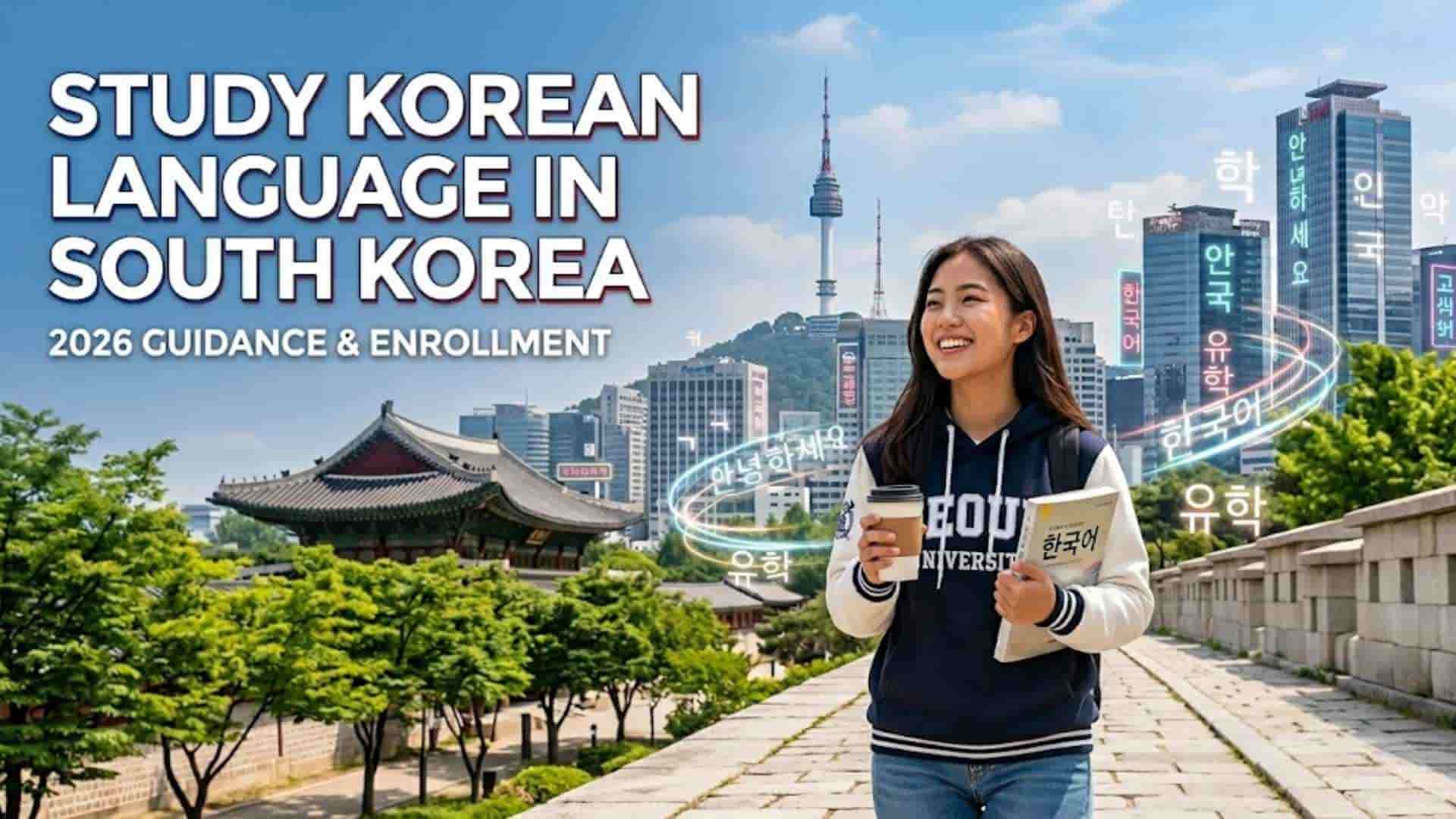
Why Study Korean Language in South Korea?
If you have ever dreamed of speaking Korean fluently — not just from an app, but truly living the language — then study Korean Language in South Korea is the most powerful step you can take. South Korea is no longer just a destination on the map. It is a global cultural force driven by K-pop, K-dramas, world-class technology, and one of Asia’s most dynamic economies.
For international students and overseas learners, immersing yourself in Korea means you are not just learning a language. You are unlocking a career, a culture, and a community. At Peoples Overseas, we have helped hundreds of students from around the world turn this dream into reality — and we are here to guide you every step of the wa
💡 "The fastest way to learn Korean is to live it — and South Korea gives you that opportunity every single day."
Top Reasons International Students Choose South Korea
- Full immersion environment — Practice Korean 24/7 in shops, cafes, transport, and daily life
- World-class universities with dedicated Korean Language Institutes (KLI)
- Affordable tuition compared to Western study-abroad destinations
- Safe, modern, and welcoming country with a large international student community
- TOPIK exam access — take the globally recognised Test of Proficiency in Korean right where you study
- Gateway to Korean jobs — Samsung, Hyundai, LG, and Kakao actively recruit multilingual talent
Best Cities in South Korea to Study Korean
1. Seoul — The #1 Destination
Seoul is the heartbeat of South Korea and home to the country’s most prestigious language programs. Neighbourhoods like Hongdae, Sinchon, and Insadong are packed with language exchange meetups, study cafes, and international student communities.
Top institutions in Seoul:
- Yonsei University Korean Language Institute (KLI)
- Seoul National University Language Education Institute
- Korea University Korean Language Center
2. Busan — Coastal City, Growing Hub
South Korea’s second-largest city offers a more relaxed pace, lower living costs, and excellent programs at Pusan National University and Dong-A University. Perfect for students who want immersion without the intensity of Seoul.
3. Daegu & Gyeongju — Cultural Immersion
For students who want deep cultural exposure alongside language learning, Daegu and Gyeongju offer programs surrounded by temples, traditional festivals, and authentic Korean daily life — with far fewer English speakers, pushing your Korean faster.
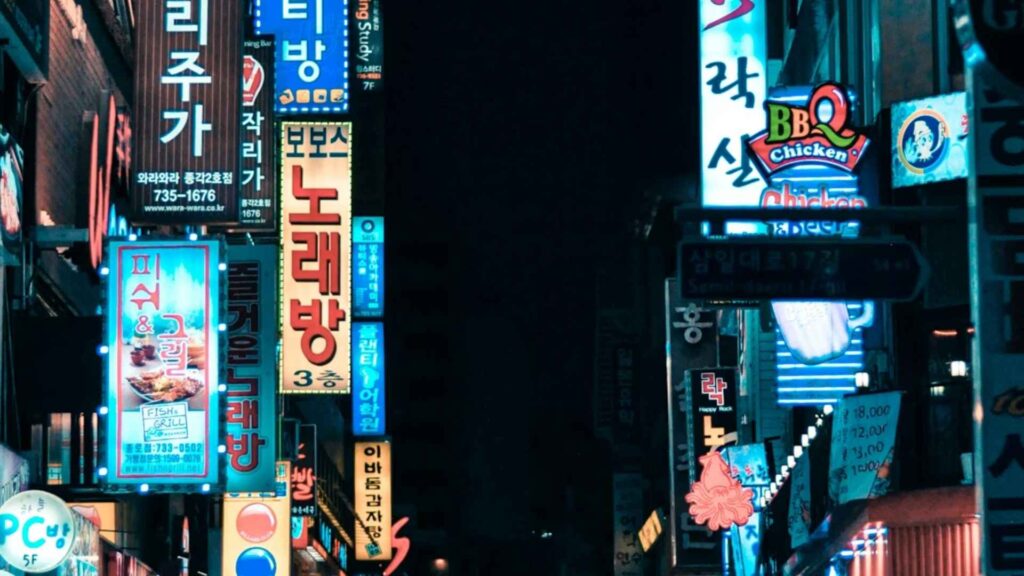
Korean Language Programs for Foreigners: What to Expect
Most university Korean Language Institutes run on a semester system (10-12 weeks per term), with four to six levels from absolute beginner to advanced.
| Level | Equivalent | Focus |
|---|---|---|
| Level 1-2 | Beginner | Hangul, basic conversation, daily expressions |
| Level 3-4 | Intermediate | Grammar, reading, writing, social topics |
| Level 5-6 | Advanced | Academic Korean, business language, media literacy |
Class hours: Typically 4 hours per day, Monday to Friday.
Average class size: 10-15 students from diverse nationalities.
How Much Does It Cost to Study Korean in South Korea?
Tuition Fees
- University KLI programs: $1,200 - $2,500 per 10-week term
- Private language academies (Hagwons): $300 - $800/month
- Online + in-person hybrid programs: $200 - $600/term
Monthly Living Costs in South Korea
| Expense | Estimated Cost (USD) |
|---|---|
| Accommodation (dormitory/goshiwon) | $300 - $600 |
| Food (home cooking + dining out) | $250 - $450 |
| Transportation (T-money card) | $50 - $80 |
| Phone & internet | $30 - $50 |
| Personal & entertainment | $100 - $200 |
| TOTAL ESTIMATE | $730 - $1,380/month |
Visa Requirements for Studying Korean in South Korea
D-4 Language Training Visa (Most Common)
- For students enrolled in university language institutes
- Valid for the duration of your program, with extensions possible
- Allows part-time work (up to 20 hours/week after registration)
D-2 Student Visa
- For degree-seeking students who also take language courses
- Requires university enrollment letter
Tourist Visa (Short-term option)
- Citizens of many countries can study short courses on a tourist visa (up to 90 days)
- Not suitable for long-term programs
TOPIK: The Korean Proficiency Test You Should Know
The Test of Proficiency in Korean (TOPIK) is the internationally recognized standard for Korean language ability — used by employers, universities, and immigration authorities worldwide.
Studying in South Korea gives you:
- Direct access to TOPIK test centers
- Preparation classes built into many KLI programs
- The best possible environment to hit your target score
TOPIK Levels: 1-2 Beginner | 3-4 Intermediate | 5-6 Advanced. Held multiple times a year in Korea and select overseas centres.
Life as a Student in South Korea
Making Friends & Building Community
Korea has a thriving language exchange culture. Apps like Tandem and HelloTalk make it easy to find Korean speakers who want to practise in exchange for your language. Most universities also run buddy programs pairing international students with Korean counterparts.
Food, Transport & Daily Life
- The subway systems in Seoul and Busan are world-class — clean, affordable, and easily navigable
- Convenience stores (CU, GS25, 7-Eleven) open 24/7 and serve as community hubs
- Korean food culture is deeply social — group meals accelerate friendships fast
Safety & Healthcare
South Korea consistently ranks among the safest countries in the world for international visitors and students. The National Health Insurance system covers foreign residents enrolled in programs of 6+ months, keeping healthcare costs minimal.
Tips for Overseas Learners: Get the Most Out of Your Journey
- Start Hangul before you arrive — Learn the Korean alphabet in advance. It takes just a few days.
- Don't hide in English — Push yourself. Every small interaction in Korean is a lesson.
- Use your neighbourhood — Your local market, subway station, and cafe are classrooms.
- Keep a vocabulary notebook — Write new words by hand for better retention.
- Watch Korean media intentionally — K-dramas and variety shows are excellent for natural speech patterns.
- Set a TOPIK goal — Having a target exam date keeps your study structured and motivated.
- Embrace being a beginner — Koreans genuinely appreciate when foreigners make an effort.
Final Thoughts: Your Korean Journey Starts Here
Study Korean Language in South Korea is not just about language — it is about transformation. Every day spent immersed in Korean culture, speaking with locals, and absorbing the rhythm of daily life brings you closer to fluency in a way no classroom elsewhere can replicate.
For overseas learners, the investment in a semester — or even a few months — in South Korea pays dividends for life: professionally, personally, and culturally.
Your Korean story is waiting to be written. 한국에서 만나요 — See you in Korea.
About Peoples Overseas
Have questions about studying Korean in South Korea? Get in touch with Peoples Overseas directly. Our expert counsellors help international students plan their Korean language journey — from university selection and visa applications to accommodation and arrival support.